The 7 Canary Islands: Largest Islands & Populations

Discover the diverse beauty, volcanic landscapes, and unique cultures of Spain's captivating Atlantic archipelago.

A Journey Through Time and Nature

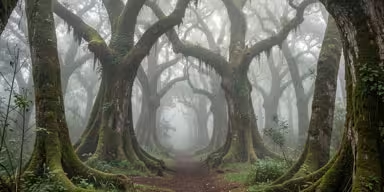
The Canary Islands are a testament to the raw power of nature and the resilience of culture. Each island boasts its own distinct microclimate. This allows you to travel from desert-like dunes to misty cloud forests in a single day. The geographical diversity of the Canaries has fostered a unique environment. Here, endemic species thrive and traditional lifestyles remain intertwined with the land.


Visitors here can explore historic colonial towns with their iconic wooden balconies,. You can also taste local delicacies like 'papas arrugadas' with mojo sauce. If you are a stargazer then this is the place for you. Witness the incredible astronomical clarity that has made these islands a global hub for star observation.
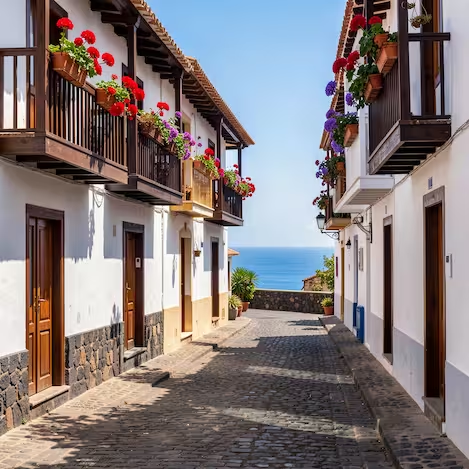
Traditional Canarian village street with flowers

Explore The 7 Canary Islands

The Canaries or Las Islas Canarias in Spanish are largely volcanic in composition. As a result, many of the beaches have black sand. There are plenty of magnificent beaches here which are one of the biggest attractions for tourists. Tenerife is the largest and most popular for tourism. Fuerteventura, Gran Canaria and Lanzarote also attract millions of visitors each year. Please use the links below to quickly move to your island of interest.

So Where Did The Canaries Name Come From?

The Canaries name does not come from the pretty birds but from Latin. Insula Canaria or “Gran Canaria” is actually a reference to Dogs. The Island Of Dogs to be precise may be a result of the huge seals in Roman times. While nobody is sure, this theory seems to be the most credible.


Another of the many names of the Canaries is the “Fortunate Isles”. This is certainly the case in Greek mythology. The ancient Greeks would often say the Fortunate Isles are a paradise with no winter. This is a reference to the superb weather and endless summer here.


map location

Map of the Canary Islands

Population & Landmass

The Canaries have a population of 2.2 million permanent inhabitants and cover an area of 7,500 km². This area accounts for around 1.5% of the countries landmass. In total there are 17 autonomous regions of Spain with these islands ranking as the 13th biggest.


Capital Cities

The Canaries are unusual given the fact they have two capital cities. Las Palmas de Gran Canaria and Santa Cruz de Tenerife share the capital city status. As you may have worked out, Las Palmas is a big city in Gran Canaria and Santa Cruz is a major city in the north of Tenerife.


Climate

The Canaries are unusual given the fact they have two capital cities. Las Palmas de Gran Canaria and Santa Cruz de Tenerife share the capital city status. As you may have worked out, Las Palmas is a big city in Gran Canaria and Santa Cruz is a major city in the north of Tenerife.

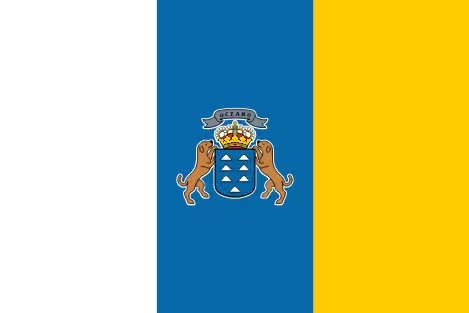
Flag of the Canary Islands

Flag of the Canary Islands
Mount Teide, Tenerife

Tenerife (Largest Canary Island)

The largest and most diverse of the Canary Islands. Tenerife is dominated by the majestic Mount Teide, Spain's highest peak. It offers a striking contrast between arid volcanic landscapes and lush northern forests. There are also plenty of popular tourist resorts, attractions and super nightlife. 


Population:

Approx. 930,000

Landmass:

2,034 km²

Capital City:

Santa Cruz de Tenerife

Closest Airport:

Tenerife North (TFN), Tenerife South (TFS)

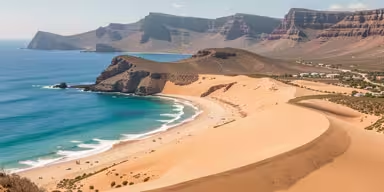
Maspalomas Dunes, Gran Canaria

Gran Canaria

Often called a 'continent in miniature', Gran Canaria boasts incredible geographical diversitF. from the sandy Maspalomas dunes in the south to the rugged, green mountains in the interior. It's a popular destination for sun-seekers and nature lovers alike.


Population:

Approx. 850,000

Landmass:

1,560 km²

Capital City:

Las Palmas de Gran Canaria

Closest Airport:

Gran Canaria Airport (LPA)

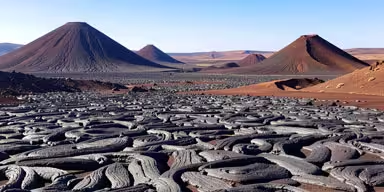
Timanfaya National Park, Lanzarote

Lanzarote

This island was shaped by volcanic eruptions in the 18th century. Lanzarote is a UNESCO Biosphere Reserve famed for its unique, lunar-like landscapes. Art and architecture are heavily influenced by artist César Manrique. These blend harmoniously with the natural environment.


Population:

Approx. 155,000

Landmass:

846 km²

Capital City:

Arrecife

Closest Airport:

Lanzarote Airport (ACE)

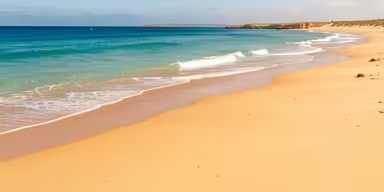
Fuerteventura Beach

Fuerteventura

Known as the 'Island of Eternal Spring'. Fuerteventura is famous for its seemingly endless stretches of golden sand beaches and clear waters. This makes it a prime destination for sunbathing, windsurfing, and kitesurfing.


Population:

Approx. 120,000

Landmass:

1,660 km²

Capital City:

Puerto del Rosario

Closest Airport:

Fuerteventura Airport (FUE)

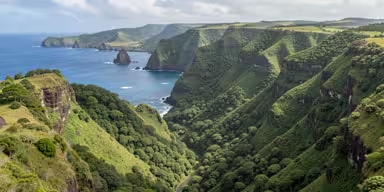
Caldera de Taburiente, La Palma

La Palma

Known as 'La Isla Bonita' (The Beautiful Island). La Palma is a verdant paradise characterized by lush forests, deep ravines, and the spectacular Caldera de Taburiente. It's also a world-renowned location for astronomical observation.


Population:

Approx. 83,000

Landmass:

708 km²

Capital City:

Santa Cruz de La Palma

Closest Airport:

La Palma Airport (SPC)

Garajonay National Park, La Gomera

La Gomera

This islands is a hiker's dream. La Gomera is characterized by its dramatic ravines, lush, ancient laurel forests within Garajonay National Park. (a UNESCO World Heritage site). It is also famous for it´s traditional whistled language ('Silbo Gomero').


Population:

Approx. 22,000

Landmass:

370 km²

Capital City:

San Sebastián de La Gomera

Closest Airport:

La Gomera Airport (GMZ) - limited flights. Ferries from Tenerife.

El Hierro Coastline

El Hierro (Smallest Canary Island)

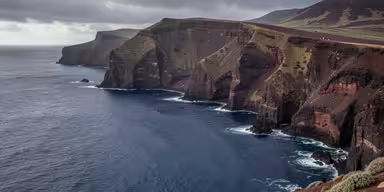
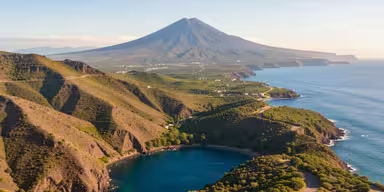
The smallest and westernmost of the Canary Islands, El Hierro is a UNESCO Biosphere Reserve and Geopark. It's a haven for eco-tourism and known for its dramatic volcanic landscapes. Here there is also unique underwater world, and commitment to renewable energy.


Population:

Approx. 11,000

Landmass:

269 km²

Capital City:

Valverde

Closest Airport:

El Hierro Airport (VDE) - limited flights. Ferries from Tenerife and La Gomera.

Smaller Islands & Islets

While these seven islands form the core of the archipelago, the Canary Islands also include several smaller islets. These include La Graciosa (north of Lanzarote), Alegranza, and Montaña Clara. All contribute to the rich biodiversity and unique geography of the region.


Each island offers a unique escape, from volcanic wonders to lush forests and golden beaches. Plan your adventure and discover the magic of the Canary Islands.