Spanish Islands In The Atlantic Ocean
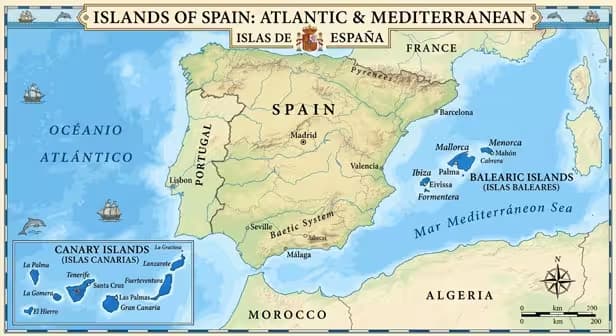
There are two main groupings of Spanish Islands in this beautiful country. Depending on your point of origin, a distance of 2,500 km’s separate these islands. The Canary Islands lie in the Atlantic Ocean off the Western coast of Africa. These islands began to form some 20 million years ago after millions of years of volcanic activity. Those closest to Africa such as Lanzarote and Fuerteventura are the oldest. La Palma and El Hierro which are further West are the youngest islands. The links below offer a brief insight into each island. You can use them to quickly navigate around this page for more information.
Map Of Spain´s Islands
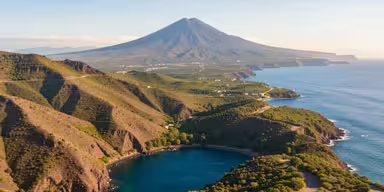
The largest and most populous of the Canary Islands. Tenerife is famous for its diverse landscapes. From the lunar-like volcanic plains of Teide National Park to the lush Anaga forests.
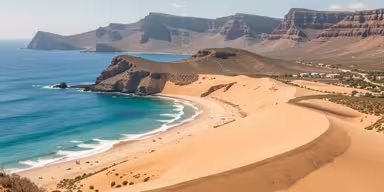
A 'continent in miniature' with diverse microclimates. This island offers everything from Saharan-style sand dunes in the south to pine forests. Famous for dramatic ravines in the interior mountains.
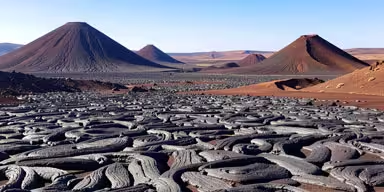
Famous for its unique volcanic landscapes shaped by eruptions in the 18th century. Lanzarote offers a surreal beauty with black sand beaches. Also many volcanic vineyards, and white-washed villages.
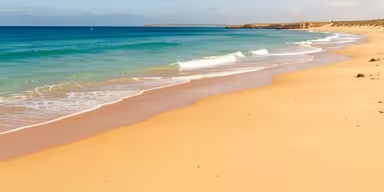
Known as the 'windy island'. Fuerteventura boasts stunning white and golden sand beaches, ideal for windsurfing and kitesurfing. There is a more arid, desert-like interior here.
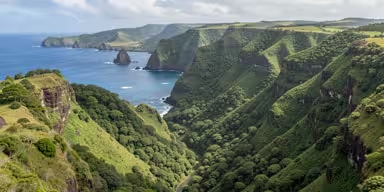
Known as 'La Isla Bonita' (The Beautiful Island). La Palma is a hiker's paradise with dramatic volcanic landscapes. There are also lush forests, and the spectacular Caldera de Taburiente National Park.
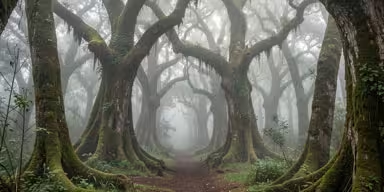
La Gomera is dominated by the ancient Garajonay National Park,. A UNESCO World Heritage site featuring unique laurel forests: Also known for its dramatic ravines and traditional whistling language.
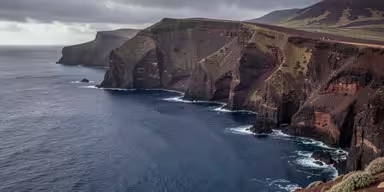
The smallest and westernmost of the Canary Islands. El Hierro is a UNESCO Biosphere Reserve and Geopark. It´s celebrated for its pristine natural beauty, unique underwater volcanic landscapes. El Hierro has a strong commitment to renewable energy.

Tenerife
The super island of Tenerife is the largest of the Canary Islands and the most populated. This Spanish Island also welcomes more tourists than any of it’s sister islands. The capital here is Santa Cruz de Tenerife. This is also the joint capital of the 7 Canary Islands archipelago of the Atlantic Ocean.
For a great winter break, this is considered among most to be the best Canary Island which boasts many amazing attractions and resorts. Two of the best attractions here are Loro Parque and Siam Park. The awesome Mount Teide Volcano also lies on this island.
Some of the top resorts here are Playa de la Américas, Costa Adeje and Los Cristianos. The cities of Puerto de la Cruz and the capital Santa Cruz are also popular tourist locations. Most tend to visit this island during the winter months. The tropical climate here makes Tenerife a top location all year round.
The points of interest and great attractions is endless on this island. Many of the beaches have black sand due to their volcanic composition. Others have imported sand from the western Sahara.
Approx. 930,000
2,034 km²
Santa Cruz de Tenerife
Tenerife North (TFN), South (TFS)
Teide, Siam Park, Loro Parque.

Gran Canaria
Number 2 on our list of Spanish Islands is Gran Canaria which is the second biggest and second most populated of the Canary Islands. The capital city of this island is Las Palmas de Gran Canaria. This is also one of the capital cities of the Canaries. 400,000 inhabitants live in the capital. This is almost 45% of the population of Gran Canaria.
Gran Canaria has over 80 beaches. These are mixture of golden sand and black volcanic sand. Most of the best beaches lie at the popular resorts such as Maspalomas and Playa del Inglés.
This island boasts some fantastic resorts and tons of attractions. The top resorts here include Playa del Inglés, Maspalomas, Puerto Rico and the capital Las Palmas.
One of the top attractions here is Palmitos Park Zoo and botanical gardens. Hikers and climbers will love the mountainous terrain here. Gran Canaria boasts some awesome peaks such as Roque Nublo and Pico de las Nieves. Roque Nublo is the highest point of the island with an elevation of 810 metres.
Approx. 870,000
1,560 km²
Las Palmas de Gran Canaria
Gran Canaria Airport (LPA)
Palmitos Park, Maspalomas Sand Dunes, Roque Nublo.

Lanzarote
Number three on our list of best Spanish Islands is Lanzarote which lies close to the Western Africa mainland. Several million visitors come here each year. The population here is around 158,000 inhabitants. Third only to Tenerife and Gran Canaria.
More incredible playas and coastline await visitors to Lanzarote. Here you will find more of the finest in all Spain. Papagayo (as shown above) is one of the most beautiful beaches on this island.
If you are looking to escape the cold, this island is one of the hottest of the Canaries during winter and spring.
The capital city of Arrecife is also the name of the airport here. This lies on the eastern coast along with several fantastic resorts such as Puerto del Carmen which is the number one destination in Lanzarote . Playa Blanca and Costa Teguise are two more great resorts.
The top attractions here are the beaches and Timanfaya National Park. Covering and area of 51 square km’s, Timanfaya is almost 100% volcanic in composition.
For those interested in day tips, ferries can take you to Isla de Lobos or Fuerteventura to the south. The ferry takes around 30 minutes to cover the short distance.
Approx. 158,000
846 km²
Arrecife
Lanzarote Airport (ACE)
Timanfaya National Park. Cueva de los Verdes, Amazing Beaches.

Fuerteventura
The popular Fuerteventura lies to the south of Lanzarote in the Canary Islands. This Spanish Island is actually the closest to the western coast of Africa. The land mass covered by this island is second only to Tenerife in the Atlantic Ocean. The population is 120,000 inhabitants.
Fuerteventura boasts over 150 beautiful beaches along it’s coastline. This island is the home of many of the best beaches of Spain. The beaches here seem to go on forever and are hardly ever crowded due to their size. This island hosts the world windsurfing and surfing championships each year. The weather conditions and wind here makes this one of the top windsurfing spots in the world.
Of course there are also many great resorts to attract the visitors. The resorts of Corralejo, Caleta de Fuste, Jandia and Costa Calma are the most popular.
One of the top attractions here is the Natural Park of Corralejo. Here you have a mix of wildlife and sand dunes as far as the eye can see. The sea that runs alongside the park is crystal clear here. It becomes an amazing shade of turquoise the deeper it gets. The super Oasis Park Zoo is another must see attraction in the south of the island.
From Corralejo you can see the tropical Isla de Lobos Island. This is an excellent day trip with ferries available to take you to this pretty island.
Approx. 120,000
1,660 km²
Puerto del Rosario
Fuerteventura Airport (FUE)
Oasis Park Zoon, Natural Park of Corralejo. Isla de Lobos.

La Palma
Next we come to La Palma which is one of the most westerly Canaries on this list. This is another island that is popular with hikers. More natural beauty is on offer when you visit here. The capital city here is Santa Cruz de la Palma. This island has a population of around 85,000 inhabitants. A quarter live in Los Llanos de Aridane with another quarter in the capital Santa Cruz. These are two most popular areas here also. Roque de los Muchachos Peaks is one of the top attractions here. This is the second highest peak in the Canaries. These peaks have an elevation of 2426 metres. Only Teide in Tenerife is taller. Another top attraction if Caldera de Taburiente National Park. This park lies in the middle of the island.
Approx. 83,000
706 km²
Santa Cruz de La Palma
La Palma Airport (SPC)
Caldera de Taburiente, Roque de los Muchachos Peaks.

La Gomera
La Gomera is one of the most beautiful of the Spanish Islands. The natural beauty of this island is amazing. A mystical paradise of mountains and valleys. This island is a hiking lovers dream come true.
La Gomera is the second smallest of the Canary Islands with a tiny population of around 21,000. San Sebastian de la Gomera is the capital city here. Valle Gran Rey is a popular destination on this island. Here you will find several volcanic sand beaches.
A top attraction here is the Garajonay National Park. This UNESCO World Heritage Site lies in the centre of the island. Los Órganos (The Organs) is another great attraction. Vertical lava pipes form symmetrical columns that resemble a giant church organ. There are various companies that offer days trips to Los Órganos.
Approx. 22,000
370 km²
San Sebastián de La Gomera
La Gomera Airport (GMZ) - limited flights. Ferries from Tenerife.
Los Órganos, Garajonay National Park.

El Hierro
El Hierro may be the smallest of Spain’s Canary Islands, but it’s big on appeal. The Gorona del Viento hydroelectric plant makes this island 100% self-sustainable. El Hierro now uses only renewable energy.
Visitors who cannot do without their internet will be pleased to know El Hierro boasts free WiFi. This is available throughout the island.
El Hierro’s nature and Marine Reserve has earned it the UNESCO World Biosphere status. Beautiful green forests reach down to sheer coastal cliffs. Weirdly twisted juniper trees have been shaped by the wind. The island’s huge Garóe tree was a source of water for earlier inhabitants. The natural pool of Charco Azul is pristine and inviting.
Approx. 11,000
269 km²
Valverde
El Hierro Airport (VDE) - limited flights. Ferries from Tenerife and La Gomera.
Cueva de Don Justo, Numerous Volcanoes, Great Diving.
Spanish Islands In The Mediterranean Sea
The Balearic Islands archipelago lies off the eastern coast of mainland Spain. The four main islands are Majorca, Menorca, Ibiza and Formentera. Of course, there are also many tiny islets that help to form the Balaeric Islands. This island grouping is the result of millions of years of tectonic plate movements. Geology experts estimate the formation of the Balearics to be 150 million ago.
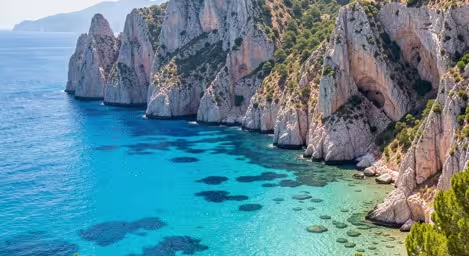
Mallorca
The largest of the Balearic Islands. Mallorca offers beautiful beaches and the Serra de Tramuntana mountain range. (a UNESCO World Heritage site), charming villages, and a vibrant capital.
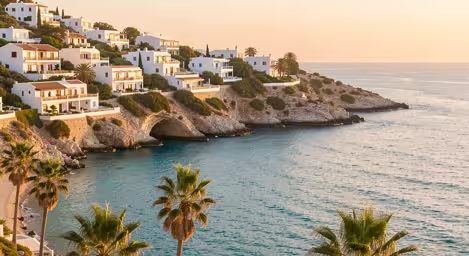
Ibiza
World-renowned for its nightlife. Ibiza also offers stunning beaches, hidden coves & charming villages. Also a UNESCO-listed old town (Dalt Vila) showcasing centuries of history.
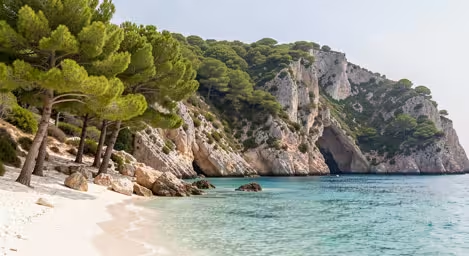
Menorca
A quieter Balearic island. Menorca is a UNESCO Biosphere Reserve celebrated for its unspoiled natural beauty. Also for pristine beaches, ancient megalithic sites, and crystal-clear waters.
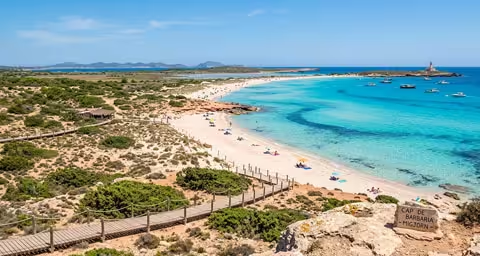
Formentera
The smallest of the Balearic Islands. Formentera is famouse for its stunning Caribbean-like beaches, clear turquoise waters. Also for the relaxed, bohemian atmosphere. It's a popular destination for day-trippers from Ibiza.

Mallorca
The Island of Mallorca is the biggest of the Balearic Islands and also the largest of the Spanish Islands. The population here is 940,000 inhabitants. This makes Mallorca the second most populated islands in Spain. This island attracts more visitors during the summer months.
Mallorca does not have the tropical climate of the Atlantic Islands but it’s beautiful. The summer weather is hot with the winters mild. There are around 40 fantastic tourist resorts on this island. Palma de Mallorca is the capital city of Majorca and the Balearic Islands.
The best resort in the north of the island include Puerto Pollensa, Can Picafort and the stunning Alcúdia. To the east of the island are the resorts of Cala d’O’r, Cala Millor, Sa Coma and Calas de Mallorca. The top resorts in the south include Magaluf, Santa Ponsa and the capital city Palma de Mallorca to name a few.
Approx. 940,000
3,640 km²
Palma de Mallorca
Palma de Mallorca (PMI).
Caves of Drach, Palma Cathedral.

Ibiza
Ibiza is the party capital of the Spanish Islands where the nightlife is legendary. Millions flock here each year to absorb the wild atmosphere and super clubs.
This island is quite small in comparison to other islands, it’s shore stretches for 150 km’s. The population here is around 150,000 inhabitants. Many that come here do so for the nightlife but there are also many different places to stay that are ideal for a relaxing holiday.
The best resorts for nightlife are San Antonio, Playa d’en Bossa and Ibiza Town. These resorts are where most of the super clubs are. Es Paradis and Ushuaia are two good examples.
The quieter resorts without the noise are Cala Llonga, Santa Eulalia, Portinatx and Es Caná. All resorts boast beautiful beaches and coves. You will find the longest beach on the island at Playa d’en Bossa. This beach has a length of 1.7 miles.
Approx. 150,000
572 km²
Ibiza Town
Ibiza Airport (IBZ).
Playa d’en Bossa, Legendary Nightlife.

Menorca
Menorca is one of the most unspoiled of the Spanish Islands. This gorgeous location boasts over 200 km’s of coastline. The capital city of this island is Mahón. Here you will find one of the most beautiful harbours in the Balearics.
Menorca is ideal for a relaxing holiday as opposed to the wild parties of Ibiza. The natural beauty here is incredible. This island is lush green with many pine forests. The beaches are one of the major lures to this island but hiking is also popular.
Cala Turqueta, Cala Trebaluger and Cala Macarella are three of the top coves you should check out. Most of the nightlife takes place in the capital Mahón to the east of the island. The capital also has a few casinos for those who like a bet.
Approx. 98,000
702 km²
Maó (Mahón)
Mahón Airport (MAH).
Menorca Harbour, Amazing Beaches & Watersports..

Formentera
The tiny Formentera is one of the smallest Spanish Islands. Although they are part of the Balearic Islands, they are also grouped as the Pityusic Islands. Formentera is 30 minutes south of Ibiza by ferry.
There is no airport on the island so the ferry is mandatory. The population here is around 12,000 inhabitants. Only El Hierro in the Canaries has smaller population. There is no airport on the island so the ferry is mandatory..
Formentera has always been famous as a hippie island. This is still true today. The beaches here are as close to the Caribbean white sand as you will see in Europe. La Savina Port and beach are a must visit.
Approx. 13,000
83.2 km²
Sant Francesc Xavier
Ferris From Ibiza Only.
Ses Salines National Park, Platja de Migjorn.